Quick answer
Canyoning is a mountain sport that descends river-carved gorges using a combination of abseiling, scrambling, jumping, sliding, and swimming. Participants follow the natural watercourse downward through narrow slot canyons, negotiating obstacles the river created over geological time. Professional instruction is mandatory in technical canyons like Galamus, where vertical rappels exceed 30 meters and water flow varies with seasonal melt.
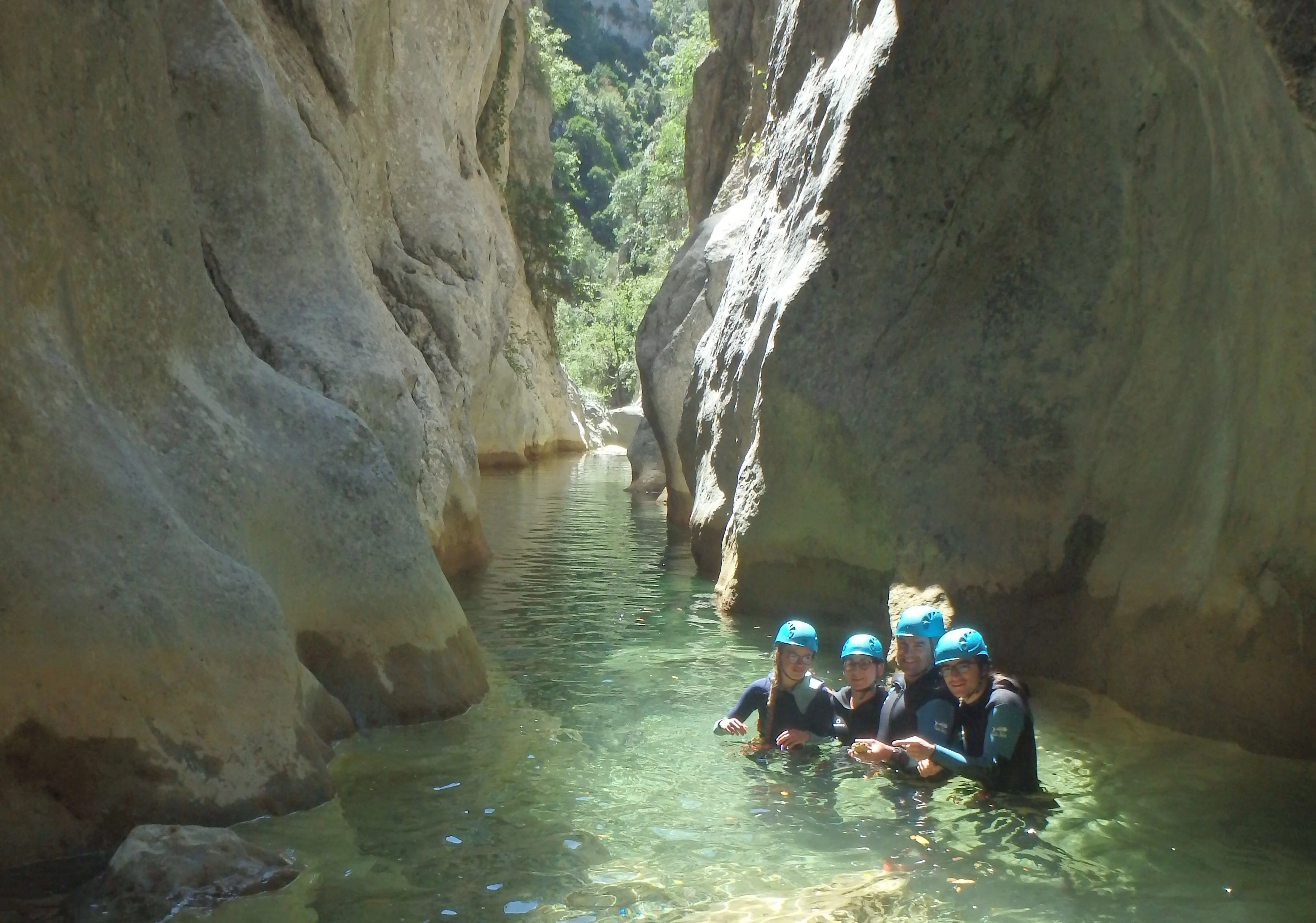
The Galamus canyon system drops 200 vertical meters through a limestone fault line carved by the Agly River over two million years. What is canyoning in this context becomes clear when you stand at the first rappel station: the sport is methodical problem-solving in a vertical river environment where retreat is not an option. The descent sequence alternates between dry rappels down polished rock faces and aquatic sections where the canyon narrows to less than two meters wide. Participants wear neoprene wetsuits year-round because the water temperature holds steady at 12°C, fed by karst springs deep in the Corbières massif. Helmets protect against rockfall in the upper chutes. Harnesses and descenders control speed on the seven major rappels, the longest dropping 35 meters into a plunge pool carved smooth by centuries of spring floods. Canyoning technique differs from climbing or caving because the environment is dynamic. Water flow changes the canyon's character within hours after upstream rain. A slide that runs dry in August becomes a hydraulic hazard in May when snowmelt peaks. Guides assess conditions daily, monitoring weather stations in the Fenouillet highlands and checking flow gauges at the D117 bridge before committing groups to the upper sections. The sport's learning curve is steep but structured. Beginners master rope handling and body positioning on shorter descents before advancing to multi-pitch technical canyons. Physical demand is moderate—the challenge lies in maintaining composure when cold water, confined spaces, and exposure combine. The Galamus route takes four to five hours to complete, with exit points only at the start and finish. Professional guiding is not a formality here. The canyon's middle section passes through a 50-meter tunnel carved by medieval monks, where rope anchors must be pre-rigged and evacuation protocols rehearsed. Solo attempts are illegal under French mountain rescue statutes, and the local gendarmerie enforces this strictly after a 2018 incident required a helicopter extraction during flash flood conditions.
“The canyon's character changes within hours after upstream rain—what runs dry in August becomes a hydraulic hazard in May.”
What Is Canyoning: The Sport Defined
Canyoning is a technical outdoor sport that involves traversing canyons using a combination of specialized navigation and rope work. It differs from standard hiking by requiring progression through the watercourse itself.
100 meters of vertical walls
The Galamus Gorge is carved by the Agly River, featuring limestone cliffs that reach heights of up to 100 meters. This geological formation creates the narrow, vertical environment necessary for canyoning activities.
Vertical descent techniques
Canyoning requires the use of rappelling, also known as abseiling, to descend steep rock faces safely. Participants manage ropes and harnesses to navigate waterfalls and vertical drops that cannot be climbed down on foot.
Aquatic navigation
The sport incorporates swimming through natural pools and navigating flowing water within the gorge. This distinguishes canyoning from rock climbing, as the route follows the water path through the canyon floor.
Technical movement methods
Progression through a canyon involves jumping into pools, sliding down natural water chutes, and wading through river sections. These movements require specific safety equipment and professional guidance to manage the hazards of moving water.
Geological formation processes
The gorge was formed by the erosion of limestone by the Agly River over thousands of years. This process created the intricate series of obstacles, narrow passages, and cavernous sections used by practitioners today.
Multi-discipline physical demands
Canyoning integrates elements of climbing, swimming, and hiking into a single experience. It requires a baseline level of physical coordination to navigate the uneven terrain, slippery surfaces, and water-based obstacles.
How to Experience What Is Canyoning Safely
Experiencing canyoning in Galamus Gorge requires hiring a certified guide who provides all technical equipment and safety instruction. The full descent typically takes 3-4 hours from briefing to exit.
Contact a local canyoning operator at least 48 hours in advance—solo exploration is prohibited due to technical rope work and vertical descents that require professional supervision.
Arrive at the meeting point
Meet your guide at the designated trailhead by 08:00-09:00 with swimwear under clothing. Guides often meet near the gorge entrance or a nearby parking area specified during booking.
Receive equipment and briefing
Your guide will fit you with a wetsuit, helmet, harness, and descender, then explain rappel signals and emergency procedures. Most beginners underestimate the importance of the safety briefing—listen closely to hand signals for descent control.
Navigate the aquatic obstacles
Follow your guide through waist-deep pools, short swims, and natural water slides, maintaining visual contact at all times. The current is stronger than it appears in narrow sections where walls compress the flow.
Perform guided rappels
Descend waterfalls using the rope techniques demonstrated earlier, with your guide securing and coaching each participant. First-timers often grip the rope too tightly—trust the harness and use a loose hand for smoother descent.
Exit and debrief
When to Plan for What Is Canyoning
The optimal time to experience canyoning in Galamus Gorge is during the morning hours, specifically the best arrival window of 08:00–12:00. Arriving early allows you to navigate the gorge before the onset of peak summer heat and high-traffic periods.
Spring (April–May)
Moderate crowdsMild, 15°C to 20°C. Ideal for comfortable movement through the water.
Early season offers higher water flow and fewer visitors.
Summer (June–August)
Heavy crowdsHot, 25°C to 30°C. Canyon water remains cool for relief.
Mid-day temperatures can be intense, making early starts essential.
Autumn (September–October)
Low crowdsCooler, 15°C to 22°C. Stable conditions for technical descent.
Water levels are generally lower and the environment is quieter.
Weekday mornings
Minimal crowds—
Choosing a weekday morning maximizes privacy and ensures access to canyoning guides.
Verdict: For the most consistent conditions, plan your trip for a weekday morning during the shoulder months of April or October.
Official Hours for Visiting What Is Canyoning
The Galamus Gorge is accessible to the public throughout the entire week. Visitors may enter the site at any time during the day or night.
| monday | 00:00–23:59 | |
|---|---|---|
| tuesday | 00:00–23:59 | |
| wednesday | 00:00–23:59 | |
| thursday | 00:00–23:59 | |
| friday | 00:00–23:59 | |
| saturday | 00:00–23:59 | |
| sunday | 00:00–23:59 |
Checklist for What Is Canyoning Prep
Canyoning in Galamus Gorge requires guided access, specific equipment, and advance booking to ensure safe descent through the narrow rock passages and water features.
-
Book your guided canyoning session in advance — Professional guides are mandatory for safe passage through technical sections.
-
Pack a swimsuit and secure footwear — You'll wade through pools and navigate wet rock surfaces.
-
Bring water and energy snacks — The activity is physically demanding and lasts several hours.
-
Arrive between 08:00–12:00 for cooler conditions — Early starts avoid midday crowds and summer heat in the exposed gorge.
-
Confirm your guide's meeting point and time — Operators may stage from different access points along the gorge.
-
Leave valuables secured in your vehicle — No storage is available within the canyon during the descent.
Check availability
Frequently asked questions about what is canyoning
Everything you need to know about what is canyoning